Mahabharata Mahatmya (Importance)
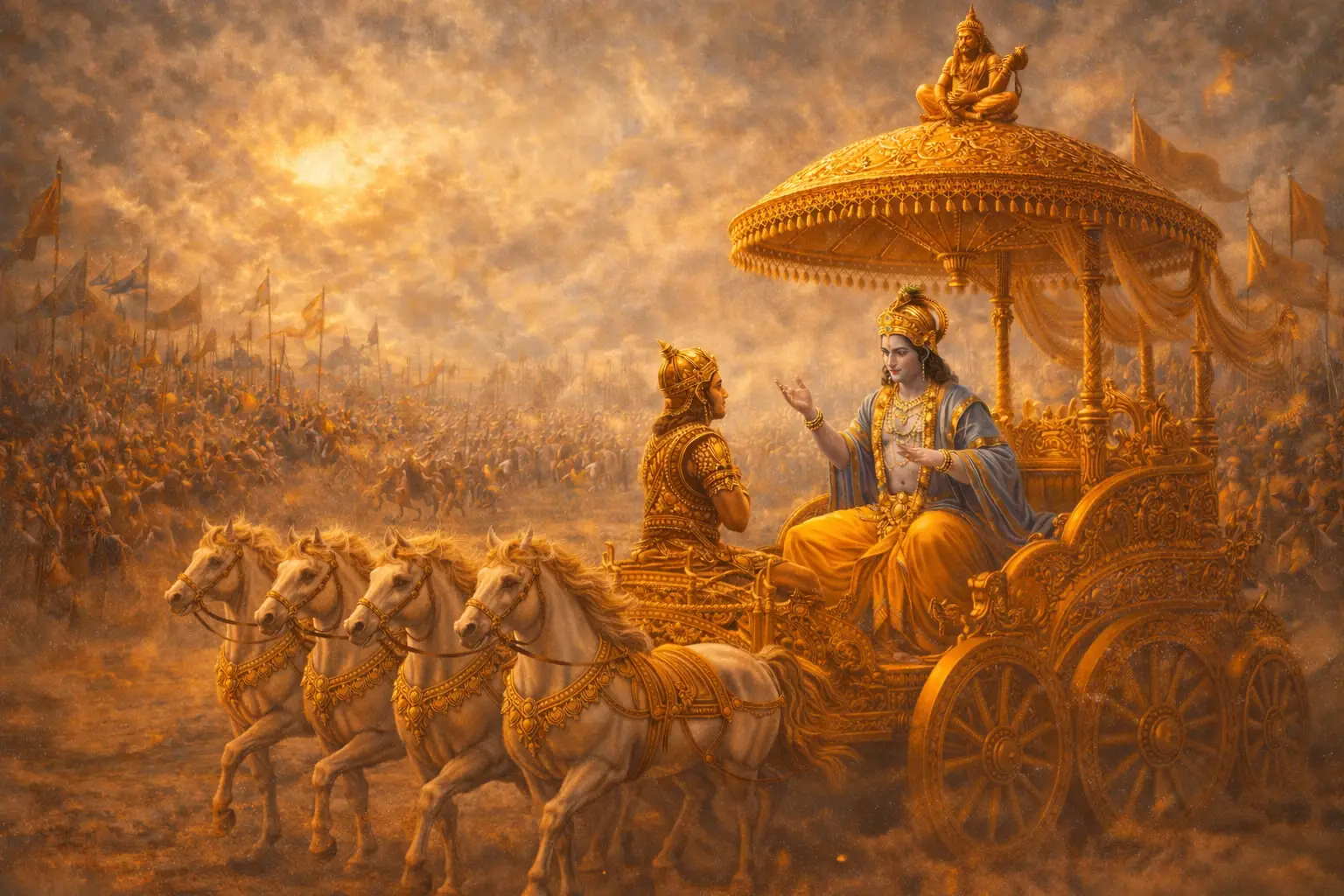
Mahabharat Mahatmya (Importance Of ..) Mahabharata: The Great Ocean of Knowledge of Sanatan Civilization Among all the sacred texts of the Sanatan tradition, there are very few works that encompass the vastness of human life, knowledge, philosophy, and spiritual wisdom as completely as the Mahabharata. It is not merely an ancient epic or a story of a royal conflict. The Mahabharata is a monumental scripture that presents a profound and comprehensive exploration of human nature, morality, duty, and the eternal struggle between righteousness and injustice. Composed by the great sage Maharshi Vedavyasa (Avatar for Shri Vishnu), this extraordinary text occupies a unique and unparalleled position in Indian civilization. It contains discussions on dharma, politics, governance, social ethics, spirituality, philosophy, science, devotion, and yoga. Because of this immense depth and scope, the Mahabharata has been regarded not simply as a historical narrative but as a complete guide to understanding life itself. For thousands of years, the Mahabharata has shaped the moral, cultural, and spiritual consciousness of the Indian civilization. Even today, its teachings remain deeply relevant for individuals, societies, and leaders alike. The Essence of the Vedas – Bhagwat Geeta The Vedas and the Upanishads contain some of the most profound spiritual and philosophical teachings known to humanity. However, these texts are often highly symbolic and difficult for the general public to fully Comprehand. Foreseeing this, Maharshi Vedavyasa presented the deeper meanings of the Vedas through the Mahabharata in a form that could be understood by all sections of society. Through narratives, dialogues, and philosophical discussions, the epic explains complex spiritual concepts in a way that becomes accessible to ordinary people. Ideas such as the nature of the soul, the reality of the Supreme Being, the law of karma, the meaning of dharma, and the path to liberation are explained throughout the text. The most luminous example of this spiritual wisdom is the Srimad Bhagavad Gita, which forms a central part of the Mahabharata. On the battlefield of Kurukshetra, Lord Krishna delivers the timeless teachings of the Gita to Arjuna, addressing the deepest questions of human life and guiding humanity toward the paths of Karma Yoga, Jnana Yoga, and Bhakti Yoga. The Bhagavad Gita is the essence of the Vedas A Grand Guide to Dharma and Human Conduct One of the greatest strengths of the Mahabharata is its detailed exploration of dharma in real-life situations. The epic presents complex moral dilemmas and illustrates how dharma must be understood and practiced within the context of life’s challenges. The Mahabharata contains extensive discussions on: Rajadharma (duties of kings and rulers) Apaddharma (conduct during times of crisis) Duties within family and society Charity and compassion Justice and governance The Guru–disciple tradition Friendship, loyalty, and responsibility Through these teachings, the Mahabharata makes it clear that dharma is not confined to rituals or religious ceremonies. True dharma lies in living with truth, integrity, compassion, and responsibility toward society. Because of this profound ethical framework, the Mahabharata has long been regarded as one of the greatest sources of moral philosophy in the Sanatan tradition. A Vast Repository of Knowledge and Civilizational Wisdom Another extraordinary feature of the Mahabharata is its vast range of subjects. It is not limited to religion or mythology but contains references to numerous branches of knowledge. The text discusses topics related to: Education and philosophy Medicine and healing traditions Astronomy and planetary systems Geography and sacred landscapes Pilgrimage sites and rivers Political strategy and governance In this way, the Mahabharata reflects the intellectual and cultural richness of ancient world civilization. It serves not only as a spiritual text but also as a repository of civilizational knowledge. Because of this remarkable breadth, scholars often describe the Mahabharata as a “Sarva-Shastra Sangraha” — a compilation containing the essence of many branches of knowledge. The Divine Presence of Lord Krishna At the heart of the Mahabharata stands the extraordinary personality of Lord Krishna – The Allmighty God Himself. In the epic, Krishna is not merely portrayed as a prince or historical figure. He is revealed as the Supreme Yogeshwara, the divine guide who leads humanity toward righteousness. Throughout the events of the Mahabharata, Krishna’s wisdom, compassion, and strategic brilliance guide the course of history. His actions demonstrate that the protection of dharma sometimes requires courage, wisdom, and decisive action. Through Krishna’s teachings, the Mahabharata delivers one of the most powerful messages of Sanatan Dharma: whenever righteousness declines and injustice rises, the Divine manifests to restore balance and guide humanity toward truth. Why the Mahabharata is Called the “Fifth Veda” Immense depth and universal wisdom of Mahabharat (and also Purans) was a deliberate initiative of Shri Vishnu’s Avatar Maharshi Ved Vyas to make the teachings of Veda’s accessible to the Kaliyug Population, hence Mahabharata is also known as – “Panchama Veda” — the Fifth Veda. Mahabharata presents the profound knowledge of the Vedas in a form that is understandable and applicable to everyday life. Through the Mahabharata, the wisdom of the Vedic tradition reached beyond the limited circles of scholars and became accessible to society at large. This democratization of knowledge is one of the reasons the epic holds such an extraordinary place in the Sanatan tradition. The Misconception that Mahabharata Should Not Be Kept at Home In modern times, a strange and baseless misconception has occasionally been spread by certain individuals claiming that the Mahabharata should not be kept in homes because it contains the story of a war. Such a claim reflects a profound misunderstanding of the epic and of the Sanatan Dharm tradition itself. The Mahabharata was composed by Maharshi Vedavyasa, one of the greatest sages of the Vedic tradition, revered as an incarnation of Lord Vishnu. According to sacred tradition, the epic itself was written by Lord Ganesha, who agreed to serve as the divine scribe when Vedavyasa narrated the text. Within this very scripture lies the Srimad Bhagavad Gita, the divine teaching spoken directly by Lord Krishna to Arjuna. The Gita is regarded as the very essence of the four Vedas